Captain's Log

In the face of threat, conflict, or intense emotional distress, the human nervous system naturally mobilizes to protect itself. While the fawn response seeks safety through appeasement and self-erasure, the flight response seeks safety through physical, emotional, or psychological distance.

If you’ve ever felt like your reactions to relational shifts, sudden distance, or subtle emotional friction are "too much" or if you’ve spent years wondering why rejection feels less like a temporary sting & more like an existential threat to your nervous system, but there is nothing wrong with your character. There is, however, a very specific story written into your biology.

When faced with threat or relational conflict, most people recognize fight, flight, or freeze. But there is a fourth survival mechanism: fawning. Fawning originates in childhood when a child is physically or emotionally unable to fight back or escape. In an unpredictable environment, the nervous system learns a vital rule: "If I can keep the threat calm, I stay safe." By regulating the adult, predicting their needs through hypervigilance, and making themselves agreeable, the child creates a fragile baseline of stability.

When life throws us into high-stress territory, we often assume our reactions—whether shutting down, over-analyzing, or desperately seeking reassurance—are just quick, instinctive impulses. But under pressure, your nervous system isn't just reacting to the immediate trigger; it’s running a deeply ingrained playbook written long ago.

When we ask ourselves, "Why do I do what I do, and how do I change?" we are often trying to understand why our connections feel volatile or disappointing. We tend to measure relational health by how intense the initial spark is, but real longevity and safety are determined by architecture, not chemistry. The I4C Model defines the foundational pillars that make a relationship fundamentally healthy, stable, and capable of enduring challenges. Practicing this formula allows you to foresee (I4C) the outcome of any dynamic.

Nobody walks into the dating world consciously looking to replay their childhood wounds. In fact, we may seek to build relationships opposite of the dysfunction or toxicity we witnessed as children. but still, there might be the feeling that a relationship isn't 'quite right', or carriers the echoes of the past, so we end the relationship & move on to one that seems to be a better fit. until we find ourselves struggling with the exact same behavioral / relational loops and triggers. in the world of psychology & attachment theory, the Corrective Emotional Experience is defined as a powerful, subconscious strategy that results in the gravitation towards individuals with similar characteristics of a parent / caregiver with whom we experienced the most emotional turbulence or dysfunction. this occurs in order to provide an opportunity to rewrite or 'correct' a painful past outcome now that the power dynamics & available resources have changed. Without realizing it, we may look for an "antidote relationship", But assigning this heavy lifting to a new partner introduces an immediate structural imbalance.

We all know the classic definition of catfishing in the digital sea. You cast a net, reel in a profile, and eventually discover the person on the other end has altered their name, used old or filtered photos, or completely fabricated their physical appearance. It’s an act of deception designed to lure you in under false pretenses. But there is a far more insidious form of piracy happening in the modern dating waters. It doesn’t involve changing a photo or a name. Instead, it involves flying a counterfeit flag. Welcome to the world of Intentional Catfishing.
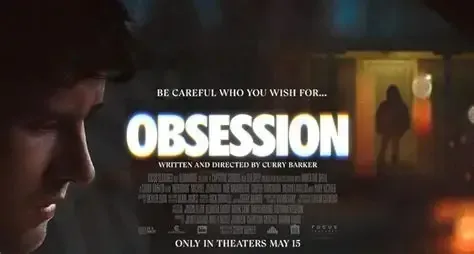
The breakout box-office success of Curry Barker’s psychological horror thriller Obsession has done something remarkable: it has turned the classic rom-com "hopeless romantic" setup into a terrifying, edge-of-your-seat cautionary tale.

The internal, and sometimes, external emotional turbulence of the Fearful Avoidant seemed to never fail in resurfacing triggers that I thought had long been buried at sea.

They all use the same Siren's Song to draw you closer, but while the melody is similar, the destination is different. So how do you distinguish a safe harbor from a shipwreck? The answer lies in the INTENTION.